
CORPORATE GOVERNANCE
Selvaag Bolig wishes to maintain a high standard of corporate governance. This will strengthen confidence in the company, and contribute to long-term value creation by regulating the division of roles between shareholders, the board and executive management over and above legal and regulatory requirements.
Corporate governance in Selvaag Bolig is based on the following main principles:
- Relevant, reliable and identical information is provided to all stakeholders and shareholders.
- An autonomous board which is independent of the company's executive management.
- A clear internal division of roles and duties is established between the board and executive management.
- Equal treatment of all shareholders in accordance with applicable legislation.
1. IMPLEMENTATION AND REPORTING ON CORPORATE GOVERNANCE
Compliance
Selvaag Bolig ASA is a Norwegian public limited liability company listed on the Oslo Stock Exchange. The company is subject to section 3, sub-section 3b of the Norwegian Accounting Act, which requires it to provide an annual statement of its principles and practice for corporate governance. This rule specifies the minimum information which the presentation must provide.
The Norwegian Corporate Governance Board (NCGB or NUES) has established the Norwegian code of practice for corporate governance (the code). Listed companies are required by the Oslo Stock Exchange to provide an annual overall presentation of their principles for corporate governance in line with the prevailing code. The current obligations for listed companies are available at www.euronext.com, and the NCGB code can be found at www.nues.no.
Selvaag Bolig observes the applicable code, last updated on 28 August 2025, in accordance with the “comply or explain” principle. This means that the individual points in the code are observed, but possible variances are explained. The company provides an annual overall presentation of its principles for corporate governance in its annual report, and this information is available at www.selvaagboligasa.no.
2. THE BUSINESS
The business purpose of Selvaag Bolig ASA is to “acquire and develop residential housing projects for the purpose of sale, purchase and sale of property, as well as other affiliated business, hereunder commercial property. The company may participate in other companies at home and abroad in relation to residential housing development.” This appears in article 3 of the company’s articles of association, which are available at www.selvaagboligasa.no. Selvaag Bolig’s goals and principal strategies are described in this annual report and at www.selvaagboligasa.no The board sets clear goals for the business with the aim of creating value for the shareholders and the rest of society. Through annual strategy processes, the board considers whether the goals and guidelines derived from the strategies are unambiguous, adequate, well operationalised and communicated to employees, customers and other stakeholders.
Selvaag Bolig has formulated guidelines for corporate social responsibility (CSR) and other policy documents in accordance with the company’s values base. CSR is described in more detail in the ESG chapter of this annual report. Selvaag’s core values are “care and creativity”, and these are well entrenched throughout the business.
The guidelines contain general principles for business practice and personal behaviour, and are intended to serve as a starting point for the attitudes and basic views which will characterise the corporate culture and day-to-day work in Selvaag Bolig.
3. EQUITY AND DIVIDENDS
Selvaag Bolig had an equity of NOK 2 409 million at 31 December 2025, including non-controlling interests. The board regards the equity as acceptable, and financing of the company is tailored to its business purpose, strategy and risk profile.
Dividend
The board has a clearly communicated dividend policy tailored to the company’s goals, strategy and risk profile. Selvaag Bolig’s ambition is to pay high and stable dividends to its owners. The goal is that the dividend should be a minimum of 60 per cent of net profit and paid twice a year. However, the size of the dividend must be balanced against the company’s liquidity forecasts and capital adequacy.
No dividend was paid for the first half of 2025. The board has proposed a dividend of NOK 1.00 per share for 2025, amounting to NOK 93.8 million. The dividend for 2025 corresponds to 70 per cent of net profit.
The board has received an authorisation from the general meeting which allows it to determine dividend payments continuously throughout the year, should the financial basis for these be present. Such a decision must formally be taken on the basis of the approved annual financial statements for 2025 and would in that event supplement the regular dividend approved by the general meeting. An authorisation of this kind must be adopted by the general meeting and will apply until the next AGM but no later than 30 June in the following year.
Purchase of treasury shares
It is appropriate that the board has an authorisation to purchase the company’s own shares, partly to implement the group’s share savings programme and remuneration arrangements for employees, and partly to use shares as a means of settlement in connection with the possible acquisition of enterprises. The board was authorised by the AGM of 24 April 2025 to acquire the company’s own shares up to a total nominal value of NOK 18 753 137, corresponding to 10 per cent of the share capital. This authorisation can be used for a possible later reduction in the share capital with the consent of the general meeting, for remuneration of the directors, for incentive programmes or as settlement for the possible acquisition of businesses, and for the purchase of shares where this is financially advantageous. The authorisation can be exercised several times, and remains valid until the AGM in 2026 and in any event no longer than to 30 June 2026. The board will propose to the AGM that it be extended by one year. Selvaag Bolig owned 71 504 of its own shares at 31 December 2025.
Share savings programme for all employees and share purchase programme for executive management
The company has a share savings programme for employees working more than half-time. This is because co-ownership by the workforce is expected to promote value creation through increased commitment and greater loyalty. The share savings programme shall encourage broad and long-term ownership and gives employees the opportunity to acquire a direct stake in the company’s value creation.
Employees can purchase shares for up to a value of NOK 200 000 per year. The price per share is the stock market price (volume-weighted average price for the final 10 days of stock exchange trading before the programme opens) less a discount of 20 per cent, conditional on a two-year lock-up period. For the same incentive and reason, the company also has a share purchase programme for its executive management. The ceiling for annual investment in the executive share purchase programme is the individual’s annual pay. The price per share is the stock market price (volume-weighted average price for the final 10 days of stock exchange trading before the programme opens), less a discount of 30 per cent as compensation is provided for the employee’s tax disadvantage, conditional on a three-year lock-up period.
The 2025 programme was conducted from 24 November to 4 December, and the trades were done 4 December. 39 employees took advantage of the offer, and 728 837 shares were purchased at NOK 32.94 per share before the discount. Since the share programmes will continue in 2026, the board will propose to the AGM that the authorisation to purchase the company’s own shares, as described in the previous section, be extended by one year.
Capital increase
The same AGM on 24 April 2025 authorised the board to increase the company’s share capital by up to NOK 18 753 137. This authorisation can be exercised several times, and remains valid until the AGM in 2026 and in any event no longer than to 30 June 2026. It replaces earlier authorisations for similar purposes, and embraces capital increases in exchange for non-monetary considerations or the right to involve the company in special obligations. The authorisation has not been utilised, and the board will propose to this year’s AGM that it be extended by one year.
Deviation from the code: The NCGB believes that grounds should be given for such authorisations and that they should be restricted to defined purposes. However, the board believes that some flexibility is needed. As long as the authorisations are clearly limited in time and scope, the ability to take such decisions should form part of the board’s administrative authority rather than requiring that an extraordinary general meeting be held.
- EQUAL TREATMENT OF SHAREHOLDERS AND TRANSACTIONS WITH RELATED PARTIES
Equal treatment of shareholders
Selvaag Bolig has one class of share, and all shares have equal voting rights. Emphasis is placed on the work of the board and the executive management to treat all shareholders equally and to give them the same opportunities to exercise influence. The company’s articles of association impose no restrictions on voting rights.
The company’s transactions in its own shares are conducted via the stock exchange or in other ways at the stock market price. In the event of an increase in share capital, existing shareholders will have a pre-emptive right to subscribe unless special considerations justify waiving this right. Any such waivers will be justified and published in a stock exchange announcement in connection with the increase in share capital.
Conflicts of interest and transactions with related parties
Selvaag Bolig is committed to transparency and caution in connection with investments on terms which could be perceived as an undesirably close transaction or relationship between the company and a large shareholder, a board member, a senior executive or related parties of these. This is outlined in the company’s ethical guidelines and instructions for the board.
Where transactions take place with related parties, they must be conducted at arm’s length and on market terms. In the event of not immaterial transactions between the company and related parties, the board will commission an independent valuation. All significant related-party transactions are reviewed by either the audit committee or the board. Transactions with related parties are described in note 23 in the company's annual report, as well as in the quarterly reports.
The board has also established guidelines which require executive management to report to the board if they have a material interest, directly or indirectly, in a contract entered into by the company.
Principal shareholder
Selvaag AS is the principal shareholder in Selvaag Bolig ASA with 53.5 per cent of the shares as at 31 December 2025. Selvaag Bolig ASA is a subsidiary in the group Selvaag AS.
4. FREELY NEGOTIABLE SHARES
No restrictions are placed by the articles of association on the ability to own, sell or vote for shares in Selvaag.
5. GENERAL MEETING
About the general meeting
Shareholders exercise the highest authority in Selvaag Bolig ASA through the general meeting. The board makes provision to ensure that the general meeting is an effective forum for shareholders. The company facilitates the appointing of proxies and for voting outside the physical meeting.
Notice
The AGM is scheduled to take place from 10:00 AM on 30 April 2026 in the company’s premises at Silurveien 2 in Oslo.
Before the meeting, shareholders have good opportunities to contact the company, either to clarify issues or to obtain help in submitting proposals to the general meeting. Detailed supporting documentation is posted to the company’s website no later than 21 days before the general meeting. See article 9 in the articles of association. Shareholders who have not asked to receive the supporting documentation for the general meeting electronically will have this sent to them by post, as specified in the company’s articles of association. The supporting documentation must contain all the details required for the shareholders to form a view of every item on the agenda.
All shareholders registered in the Norwegian Central Securities Depository (VPS) will receive the notice and have the right to submit motions and to vote directly or by proxy. A financial calendar, which includes the date of the AGM, is available on the company’s website.
Registration and proxy form
Registration must be made in writing, by post, VPS account or e-mail. The board wishes to facilitate attendance by the largest possible number of shareholders at the general meeting. Shareholders who cannot attend in person are encouraged to appoint a proxy. Provision is made for the shareholder to specify separate voting instructions to their proxy for every item on the agenda. All information on the appointment of a proxy and the appropriate forms can be found on the company’s website.
Agenda and execution
The general meeting elects its own chair. The meeting is opened by the chair of the board, who also arranges for the election of a chair for the meeting. The AGM’s duties include adopting the annual financial statements and directors’ report and considering the board’s guidance and report about remuneration to leading employees.
Members of the nomination committee and its chair are elected by the general meeting. In addition, the general meeting considers such other matters as are assigned to it by legislation or the articles of association. The minutes of the general meeting are published via a stock exchange announcement and are made available on the company’s website at
www.selvaagboligasa.no after the meeting.
The AGM in 2025 took place on 24 April, and 64.11 per cent of the total issued shares and votes were represented.
An extraordinary general meeting was held on 8 October 2025 to elect a new board member. 64.07 per cent of the total outstanding shares and votes were represented.
According to the NCGB code, provision should be made to vote for individual candidates for the board and the nomination committee.
Deviation from the code: The nomination committee believes that the board’s overall composition is important for the way it functions. For that reason, the company invites the general meeting to vote for the nomination committee’s collective recommendations for the election of the board and nomination committee.
According to the code, the board and chair of the nomination committee should attend.
Deviation from the code: The chairs of the board and the nomination committee, as well as the CEO, are always present to answer possible questions. The whole board will attend if this is considered necessary in view of items on the agenda.
6. NOMINATION COMMITTEE
Pursuant to the articles of association, the nomination committee will have three members elected for a one-year term. The majority of these members must be independent of the company’s board and executive management, and the committee must act in the interests of shareholders in general. The chair of the nomination committee is elected by the general meeting, which also determines the remuneration of the committee’s members. The nomination committee itself recommends members of the committee.
All members of the nomination committee are up for election in 2026. The nomination committee currently comprises:
- Gunnar Bøyum (chair)
- Helene Langlo Volle
- Leiv Askvig
The duties of the nomination committee are to propose candidates for election as directors and to recommend fees for the directors, members of board sub-committees and members of the nomination committee. The report of the board’s annual self-assessment is considered by the committee.
The committee will account for its work and present its recommendations, with justifications, to the general meeting. The recommendations must encompass relevant information about the candidates and an assessment of their independence from the company’s executive management and board. The committee is in contact with shareholders, directors and the chief executive during its work on proposing candidates for the board, and anchors its recommendations with the company’s largest shareholders. The committee’s recommendations, with justifications, are made available 21 days at the latest before the general meeting takes place. Recommendations from the committee must meet the requirements for the composition of the board which derive at any given time from applicable legislation and statutory regulations.
Article 7 of the articles of association specifies that the company will have a nomination committee. Guidelines have been established on this committee’s duties and composition, and on the eligibility of candidates for election. These guidelines were adopted by the general meeting held on 30 August 2011.
8. COMPOSITION AND INDEPENDENCE OF THE BOARD
Composition of the board
Pursuant to article 5 of the company’s articles of association, the board of Selvaag Bolig will comprise three to nine members. The chair and the shareholder-elected directors are elected by the general meeting, based on recommendations from the nomination committee.
The board currently comprises seven directors and is composed in such a way that it meets the company’s need for expertise, capacity and diversity. Weight is given to the whole board being in possession of a broad business and management background as well as in-depth understanding of the housing industry and property development. There are five shareholder-elected board members, of whom two are women, and two employee-elected board members, of whom one is a woman. An overview of each director’s expertise, background and shareholding in the company is available on the company’s website at www.selvaagboligasa.no. All shareholders can propose candidates for the board, and information on how candidates can be nominated is available on the company's website.
Employees of the business are represented on the board, and the number of these worker directors is specified in the applicable agreement on pay and conditions. At present, two directors – one male and one female – are elected by the employees. None of the shareholder-elected directors are employed by or have carried out work for Selvaag Bolig other than work related to their board positions.
Shareholder-elected directors are elected for one-year terms. Employee-elected directors are elected for two-year terms. All shareholder-elected directors are up for election in 2026. Directors’ fees are determined by the general meeting based on a recommendation from the nomination committee.
Independence of the board
The composition of the board ensures that it can act independently of special interests, and it must also function effectively as a collective body to the benefit of the shareholders in general.
No shareholder-elected director is involved in the executive management. Chair Olav Hindahl Selvaag is a director of Selvaag AS and director Tore Myrvold is the CEO of Selvaag AS. Selvaag AS is the company’s principal shareholder and, through subsidiaries and other investments, may have business relations with Selvaag Bolig.
The other shareholder-elected directors are independent of Selvaag Bolig’s executive management and significant business relations.
See the remuneration report for 2025 published on the company’s home page www.selvaagboligasa.no on the shareholdings of directors in Selvaag Bolig at 31 December 2025. By virtue of their position, each director is subject to the regulations on primary insiders, with clear rules related to such issues as the duty to investigate and report in the event of trading in the company’s shares.
9. THE WORK OF THE BOARD OF DIRECTORS
The board’s duties
The board of directors bears the ultimate responsibility for management of the group and for supervising the chief executive and the group’s operations.
That makes the board responsible for ensuring an acceptable organisation of the business and determining strategies, plans and budgets. The board participates in important strategic discussions throughout the year and undertakes an annual audit of the company’s strategy. Furthermore, the board is responsible for establishing control systems and for ensuring that the group is operated in compliance with the established values base, the ethical guidelines and the expectations of the owners for socially responsible operation. The board has a duty to ensure that the financial statements and asset management are subject to satisfactory controls. Matters of significant strategic or financial importance are dealt with by the board. The board is responsible for appointing the chief executive, establishing the chief executive’s instructions, authorities and terms of employment, and determining the chief executive’s remuneration. In addition, the board will protect the interests of the shareholders while also having a responsibility for the company’s other interests.
Each director is duty-bound to consider at all times whether conditions exist which, viewed objectively, might weaken general confidence in their impartiality or which might lay the basis for conflicts of interest. The company also follows up the various offices and so forth held by the directors to provide an information base for the company’s management in avoiding unintentional conflicts of interest.
13 board meetings were held in 2025, nine as physical gatherings.
| Director | Attendance, no. of meetings | Attendance in per cent |
|---|---|---|
| Olav Hindahl Selvaag | 13 of 13 | 100 |
| Gisele Marchand | 12 of 13 | 92 |
| Camilla Wahl | 8 of 10 | 80 |
| Petra Krüger1) | 2 of 3 | 67 |
| Øystein Thorup | 13 of 13 | 100 |
| Tore Myrvold | 13 of 13 | 100 |
| Patrik Eriksson | 11 of 13 | 85 |
| Sissel Kristensen | 3 of 3 | 100 |
| Andrea Utne Tveter2) | 9 of 10 | 90 |
| 1) Petra Krüger replaced Camilla Wahl from 8 October 2025 | ||
| 2) Andrea Utne Tveter replaced Sissel Kristensen from 1 May 2025 | ||
Instructions for the board
The board has adopted instructions which specify the rules and guidelines for its work and administrative procedures. These are reviewed annually or as required. The instructions for the board define the duties and obligations associated with its work, and its relationship with the chief executive. The chair is responsible for ensuring that the work of the board is conducted in a correct and efficient manner. The board works on the basis of an annual plan, with specified topics and issues for board meetings. The board evaluates its work and competence on an annual basis. This is done through a self-assessment which is summarised for the nomination committee. At least once a year, the board reviews the most important areas of risk as well as internal control in the company.
Instructions for the chief executive officer
The CEO of Selvaag Bolig ASA is responsible for the executive management of the Selvaag Bolig group. The chief executive must also ensure that the financial statements comply with legislation and other relevant provisions, and that the group’s assets are managed in an acceptable manner. The CEO is appointed by the board of directors and reports to it. The CEO is duty-bound to keep the board continuously informed on the group’s financial position, operations and asset management. The board has also approved an authority structure for the company which clarifies the authority of the CEO and the executive management in terms of which issues must be considered by the board.
Financial reporting
The board receives periodic reports with comments on the company’s financial status. Where interim reporting is concerned, the company observes the deadlines specified by the Oslo Stock Exchange.
Board committees
The board has found it appropriate to establish sub-committees to serve as preparatory and advisory bodies for the board.
Audit committee
The audit committee is a preparatory and advisory body for the board. It is elected by and from among the directors, and must comprise at least two directors. At least one of these should have experience from the exercise of accounting or financial management, or of auditing. Members are appointed by the board, and changes to its composition are made when the board might wish to do so or when the members cease to be directors of the company. The audit committee currently comprises the following members:
- Gisele Marchand (chair)
- Tore Myrvold
The company’s auditor also attends all the meetings.
The board has adopted separate instructions for the audit committee, which will, among others:
- review the company's quarterly, annual and related reports, including ESG reporting, and prepare the board's follow-up of the financial reporting process.
- maintain ongoing contact with the company's elected auditor concerning the audit of the annual financial statements.
- assess and monitor the independence and objectivity of the auditor and particularly to what degree services other than audit are provided by the auditor.
- assess the quality of the external audit, be responsible for preparing the company's choice of auditor and make its recommendation.
- ensure that the company has established sufficient and suitable processes for internal control and risk management to ensure that laws and regulations closely tied to financial and non-financial reporting are followed.
- Process all significant transactions with related parties.
The audit committee met seven times in 2025.
The remuneration committee
The remuneration committee serves as a preparatory and advisory body for the board, comprising up to three directors who are independent of the company’s executive management. The members of the remuneration committee are appointed by the board for two-year terms or until they cease to be directors of the company. The remuneration committee currently comprises:
- Olav Hindahl Selvaag (chair)
- Gisele Marchand
- Øystein Thorup
The board has adopted separate instructions for the remuneration committee. It must, among other things:
- prepare issues for consideration by the board concerning salary and terms of the chief executive.
- prepare the board's processing of scorecards/KPIs as a basis for the bonus assessment for senior executives.
- prepare the board's consideration of issues of principle related to salary levels, bonus systems, pension terms, employment agreements and the like for the company's senior executives.
- address special issues related to compensation for employees in the group to the extent that the committee finds that these affect matters of particular importance to the group's competitive position, profile, recruitment ability, reputation, etc.
The committee has held six meetings in 2025.
10. RISK MANAGEMENT AND INTERNAL CONTROL
Responsibility and purpose of the board
Risk management and internal control in Selvaag Bolig are intended to help ensure that the company takes a coherent approach to its operations, financial reporting and compliance with applicable legislation and regulations. The board regularly reviews Selvaag Bolig’s risk management and internal control, as well as its guidelines and the like on how the company integrates concern for the world at large with value creation. Internal control also embraces the company’s values base, CSR and ethical guidelines, which apply to all company employees.
Board reviews and reporting
An annual strategy meeting is held by Selvaag Bolig to lay the basis for the board’s consideration and decisions during the year.
A survey of the company’s risk factors and risk management is conducted regularly. This exercise plays a key role for the board’s annual strategy meeting, and defines the direction of further work on the company’s risk management. An overarching management model has been established for continuous follow-up, based on the group’s strategy, values base and ethical guidelines. In addition, principles have been drawn up for reporting in the key areas, as well as guidelines for central processes and activities. An authority matrix has also been established for delegating responsibilities to defined roles in the organisation. All employees have clear guidelines on the scope of their own authority and on the next level up for decisions or approvals.
Selvaag Bolig has established a set of internal procedures and systems which are intended to secure uniform and reliable financial reporting and operations. A quality assurance system has also been established to safeguard quality when executing the group’s projects. One component of this system is a review, conducted at least once a quarter, of risk in the projects and other parts of the business. This review identifies the financial development of the company’s projects and makes it possible to implement possible risk-reducing measures. Planning, management, execution and financial follow-up of construction and production processes and projects are integrated in the Selvaag Bolig group’s commercial operation. Construction projects report systematically to the group management.
Selvaag Bolig’s consolidated financial statements are prepared in accordance with the applicable IFRS standards. The board receives periodic reports on the group’s financial results as well as a description of the status of the most important individual projects. The auditor attends meetings of the audit committee and board meetings related to the presentation of the preliminary annual financial statements. The company’s key risk factors are described in the directors’ report.
11. REMUNERATION OF THE BOARD OF DIRECTORS
The general meeting determines directors’ fees annually on the basis of a recommendation from the nomination committee.
A total of NOK 2 817 000 was paid in directors’ fees for 2025. Shareholder-elected directors are given compensation of NOK 50 000 in addition to ordinary board remuneration, where the net proceeds after tax are assumed to be used for the purchase of shares in the company. Remuneration to the individual directors in 2025 is stated in the executive remuneration report published at www.selvaagboligasa.no. Directors’ fees are not linked to the group’s performance. No options are awarded to directors, and shareholder-elected directors have no agreement on a pension plan or on payment after their period of service has ended. None of the shareholder-elected directors perform work for the company in addition to their directorship.
Directors observe general insider regulations for trading in the company's shares. See the aforementioned executive remuneration report for an overview of shares owned by directors.
12. REMUNERATION OF EXECUTIVE PERSONNEL
As mentioned in section 9, a remuneration committee comprising up to three directors has been established. The committee shall support the board’s work on the strategy for and main principles of remuneration for the company’s senior executives, including the determination of scorecards and the conditions of employment for the chief executive.
The individual components in a remuneration package must be assessed collectively, with fixed basic pay, possible variable pay and other benefits such as pension and termination payments viewed as a whole. Variable pay in the form of bonus payments will be based primarily on objective, definable and measurable criteria. Such variable pay in the form of bonuses cannot exceed 100 per cent of basic pay for the executive personnel. No options have been awarded to employees or elected officers of the company.
The guidelines and report about remuneration of executive personnel are presented annually to the general meeting in connection with its consideration of the financial statements.
13. INFORMATION AND COMMUNICATION
Selvaag Bolig endeavours to ensure that all reporting of financial and other information is timely and correct, and based on openness and equal treatment of players in the securities market. The company observes the recommendations of the Oslo Stock Exchange on reporting investor information, which came into force on 1 January 2012. Information from Selvaag Bolig is published in the form of annual and interim reports, press releases, stock exchange announcements and investor presentations. All information regarded as significant for the valuation of the company is distributed and published via Modular Finance and Oslo Stock Exchange’s messaging system www.newsweb.no, as well as www.selvaagboligasa.no.
The company presents its interim annual results by the end of February. Full financial statements, together with the directors’ report and the rest of the annual report, are made available to shareholders every year at least three weeks before the AGM, and by the end of April at the latest. Interim figures are reported within 60 days of the end of the quarter, in accordance with the rules of the Oslo Stock Exchange.
The financial calendar is available on www.selvaagboligasa.no and www.newsweb.no. The primary purpose of information from the company will be to clarify the company’s long-term goals and potential, including its strategy, value drivers and important risk factors. The company’s guidelines for investor relations provide more detailed specifications of the way information is handled in the group, including defining who will act as the company’s spokesperson on various matters. The CEO and CFO of Selvaag Bolig will be the primary spokespersons to the financial market on behalf of the company.
14. TAKEOVERS
The company’s articles of association place no restrictions on the purchase of shares in the company. In the event of a possible takeover bid, the board will help to ensure that the company’s shareholders are treated equally and that the group’s day-to-day operations are not disrupted unnecessarily. The board will seek to help ensure that the shareholders have sufficient information and adequate time to form an opinion on a takeover bid.
The instructions for the board of Selvaag Bolig ASA specify how the company will respond should an offer be made for the company’s shares. In such cases, the board will issue a statement which contains an assessment of the offer and a recommendation to the shareholders on whether they should accept it. In this assessment, the board should take account of such considerations as the way a possible takeover would affect long-term value creation in the company. A justification of the recommendation must be provided.
15. AUDITOR
Election of auditor
The group’s auditor is elected by the general meeting. Selvaag Bolig’s auditor when presenting the accounts for 2025 is PricewaterhouseCoopers (PwC).
Auditor’s relationship with board and audit committee
The auditor gives the board an account of its work and provides an assessment of the company’s financial reporting and internal control in connection with the annual financial statements. At this meeting, the board is briefed on which services in addition to auditing have been provided during the year. The auditor meets the board at least once a year without the executive management being present. The auditor has the right to attend Selvaag Bolig’s general meeting. Written confirmation must be provided once a year by the auditor to the board that the specified requirements for the independence of the auditor have been met.
The auditor attends the meetings of the audit committee. Once a year, the auditor must present the committee with the main features of the plan for conducting the audit work. The auditor will review possible significant changes in Selvaag Bolig’s accounting principles, assessments of significant accounting estimates and all significant conditions where disagreement has occurred between the auditor and the executive management. At least once a year, the auditor must review Selvaag Bolig’s internal control system with the audit committee, including identifiable weaknesses and proposals for improvement. The board briefs the general meeting on the auditor’s fee, broken down between audit work and other services in addition to auditing.
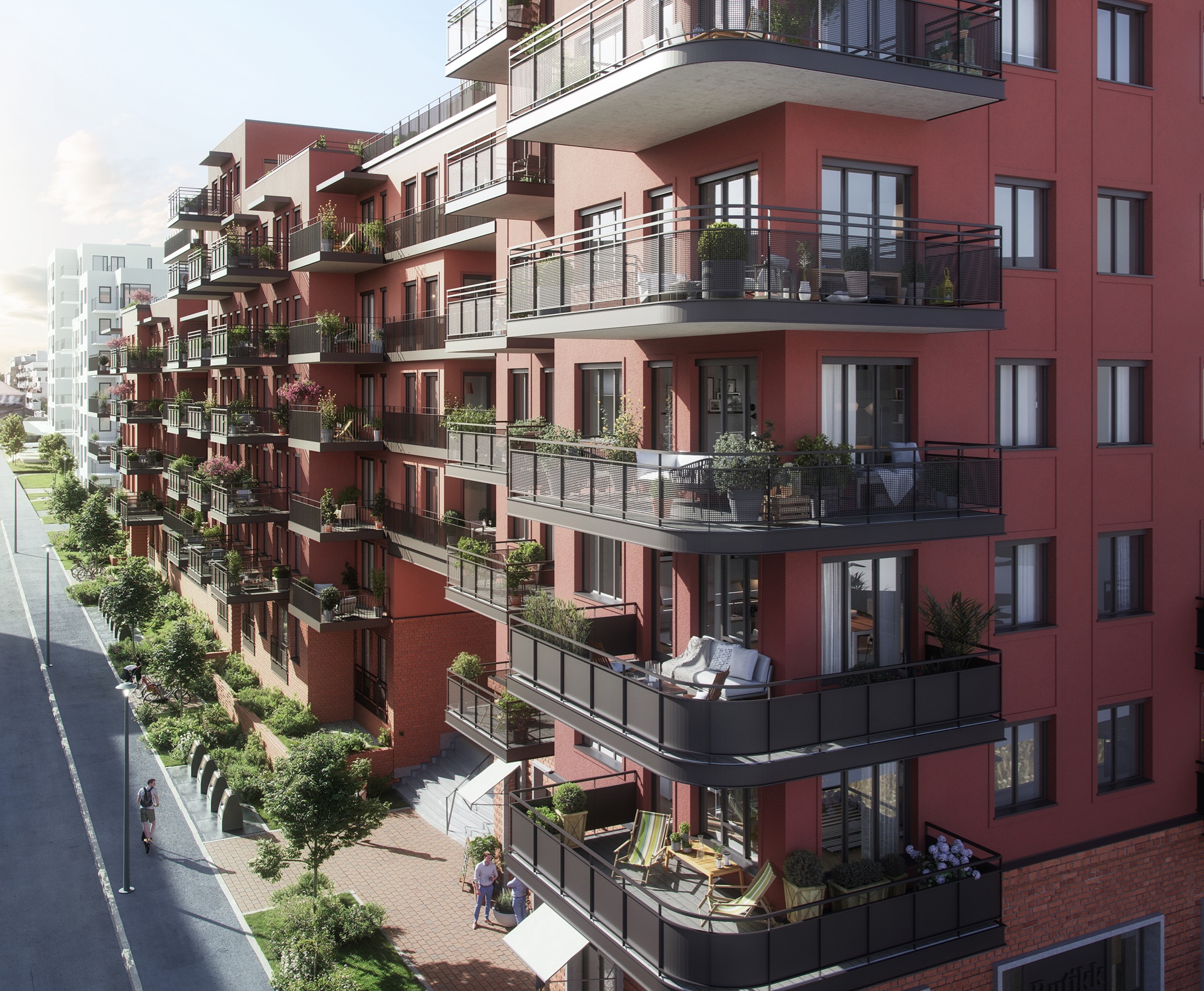
Fornebu Sentrum, Bærum
BOARD OF DIRECTORS, SELVAAG BOLIG ASA
Olav H. Selvaag (born 1969)
Chair
Selvaag has been chair of Selvaag Bolig ASA since 2008. He began his career at KLP Eiendom and has subsequently worked in construction, commercial property and housing development. Selvaag works today as the owner of Selvaag AS and as one of its directors. He is chair of architecture firm Snøhetta AS, Selvaag Bolig ASA and Selvaag By, as well as a member of NHOs Owners’ Forum. Selvaag has an MSc from Stanford University in the USA. He chairs the company’s remuneration committee. Selvaag is a Norwegian citizen.
Gisele Marchand (born 1958)
Director
Marchand has been a director of Selvaag Bolig ASA since 2012 and served as chair in 2018-19 while Olav H Selvaag was acting CEO. She has broad management and boardroom experience. Earlier positions include executive vice president for the retail market in Norway at DNB and CEO of Batesgruppen, the Norwegian Public Service Pension Fund, Eksportfinans and the Haavind law firm. Marchand has boardroom experience from such companies as Oslo Børs, Norske Skog, Fornebu Utvikling and as chair of Gjensidige Insurance. She currently works full-time in boardroom positions, serving as chair of Nationaltheatret AS, Norgesgruppen Finans AS and Boligbygg KF, as a director of Norgesgruppen ASA, Eiendomsspar AS and Victoria Eiendom AS, and as a member of the nomination committee for Entra ASA. Marchand has a BSc in business economics from CBS Copenhagen Business School. She chairs the company’s audit committee and sits on its remuneration committee. Marchand is a Norwegian citizen.
Tore Myrvold (born 1971)
Director
Myrvold has been a director of Selvaag Bolig ASA since 2018. He began his career in Deloitte where he became a certified public accountant before going to Hjemmet Mortensen. Since 2005 he has been employed by Selvaag AS and served in such posts as CFO and executive vice president before becoming CEO in 2016. He has a number of directorships related to Selvaag’s operations and investments. Myrvold has an MSc in business economics from the BI Norwegian Business School and has a higher degree in auditing from the Norwegian School of Economics (NHH). He is a member of the board’s audit committee. Myrvold is a Norwegian citizen.
Petra Krüger (born 1972)
Director
Krüger has been a director of Selvaag Bolig ASA since October 2025. She has extensive experience in property and housing development from companies such as NCC Property Development AB, Skanska Sverige AB and BoKlok Housing AB (IKEA and Skanska). Since 2020, she has been CEO of NCC Property Development AB. Through her positions, she has gained broad experience and a network of contacts in the Swedish and Nordic market. Krüger is a Swedish citizen.
Øystein Thorup (born 1971)
Director
Thorup has been a director in Selvaag Bolig ASA since 2020. He is a lawyer with top-level executive experience from the property sector as CEO at Orkla Eiendom AS and, since 2012, at Avantor AS Eiendom. He has experience from a number of directorships and is familiar with the whole value chain in project development. He is a member of the company’s remuneration committee. Thorup is a Norwegian citizen.
Andrea Utne Tveter (born 1996)
Employee-elected director
Tveter has been a director of Selvaag Bolig ASA since May 2025. She holds a law degree from the University of Bergen and has been employed by Selvaag Bolig ASA since 2022, first as an associate and then as an attorney from 2023. Tveter is a Norwegian citizen.
Patrik Eriksson (born 1985)
Employee-elected director
Eriksson has been a director of Selvaag Bolig ASA since 2021. With an MSc in civil engineering from Chalmers University of Technology in Gothenburg, he has worked on project management at Selvaag Bolig since 2014 and became a project director in 2021. Eriksson is a Swedish citizen.